
Seombra
On Longing, Beauty, and the Just-Out-of-Reach

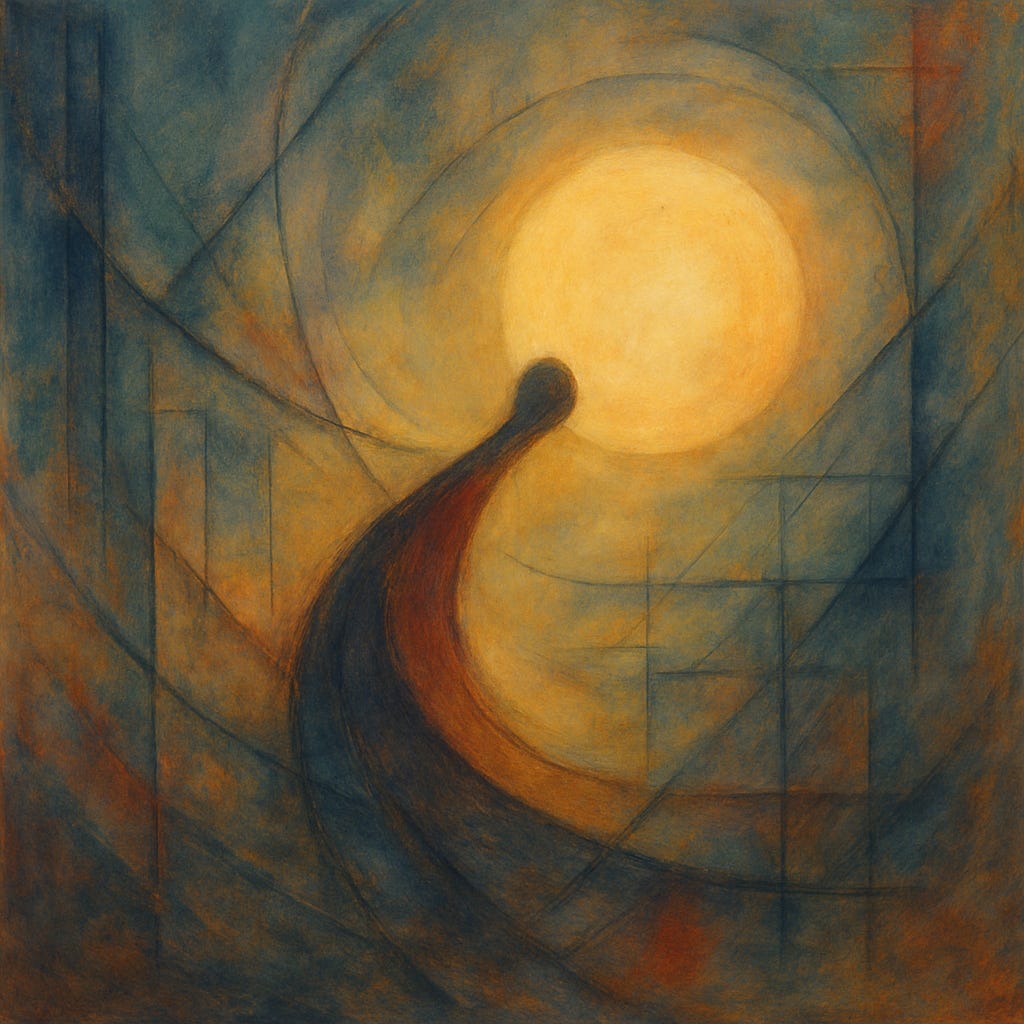
seombra
abstract noun \ ˈsehm-brə \
1. A presence or ideal that feels perpetually near yet remains unreachable; an emotional or perceptual illusion of closeness, often tied to longing or desire.
She lived within a state of constant seombra: the life she might have had, just out of reach.
2. An intangible ideal or aspiration that, though inherently unattainable, inspires persistent striving—fueling both hope and the bittersweet frustration of its elusive nature.
His career was driven by a seombra of perfection—a vision forever just beyond reach, yet one that inspired every decision.
Recently, I have been pondering that feeling of chasing after something which seems so vividly perceptible, is just within reach, and yet the more one tries to attain it, they never seem to actually reach its objective culmination. There is so much of this in our culture: obtaining wealth which one never seems to be able to get enough of; beauty standards which so many attempt to put upon themselves without a real archetype; or the search for a true, unfailing, and unwavering love which oftentimes ends in heartbreak or divorce because the perfect, fantastical standard has not been lived up to. Except what are these standards? What are these goals? They appear so set in stone, but reveal themselves to be transient and out of reach, instead; wealth, beauty, and love should, in a sense, be objective: one has enough money to live comfortably with, beauty has been described by so many philosophers as an objective human experience (so why is it that so many people concern themselves with fads and trends, each contradicting the other’s definition of beauty?), and true love should be selfless and yet mutually beneficial whilst fulfilling all the Ancient Greek terms for it—agape, filia, and eros. Therefore, as these goals do appear to exist in some real capacity, why do people so often feel as though they are grasping at the air, so to speak, unable to achieve them in their fullest extent?
There are many times when I wished there existed a term to describe this feeling with. It seems like one of those beautiful, untranslatable words from other languages: hiraeth (a longing for a romanticized past), saudade (the realization that one cannot visit that past anymore; it’s ceased to exist, and perhaps it never existed in the first place), gökotta (rising early to hear the birds chirping), for example. English terms like elusive or ephemeral, while they come close, just do not capture the spirit of this feeling. So, as one of my favorite interests is the exploration of etymology, the ancient words they come from, and their evolution throughout history, I decided to come up with my own term for it :)
Derived from the old English word sēon (to see with one’s eyes, or perceive with one’s soul) and the Spanish word sombra (a shadow), seombra means, literally, to perceive a shadow. Shadows are a consequence of some real thing; a shadow can indicate the presence of a person, or a tree, or a building. And yet, if one was only to look at a shadow, they would be limited to being able to grasp the outline of its represented figure and not its fullness. Our examples of perfect wealth, beauty, and love exist, in our fallen nature, as mere shadows—the culmination of each, perceptible, but just out of reach and understanding.
Perhaps the answer, or rather remedy, to feelings of seombra exist in humility—the knowledge that we, as humans, are unable, at present, to fully grasp these archetypes of perfection. It is my own opinion that we experience a seombra here on earth of the world to come; as Augustine writes, each person experience a foreshadowing of their future state after their passing here on earth which is not fully realized in this life. The experience of perfect love, beauty, and fullness awaits its fulfillment in the age to come, in union with God the Trinity. Meanwhile, in the web of confusion that is our earth and society, we all attempt to satisfy this longing with futile things: nice cars and houses, Instagram filters and plastic surgery, and selfish love—all of which lead to a sense of emptiness instead of fulfillment. Instead, it is imperative to attach oneself to the One who is the culmination of this perfection: Who is perfect love, the Most Beautiful—only He can deliver a person from such empty seombra and turn it into an ultimate fulfillment.